 Move Why This Tool Exists
Open Why This Tool Exists
Why This Tool Exists
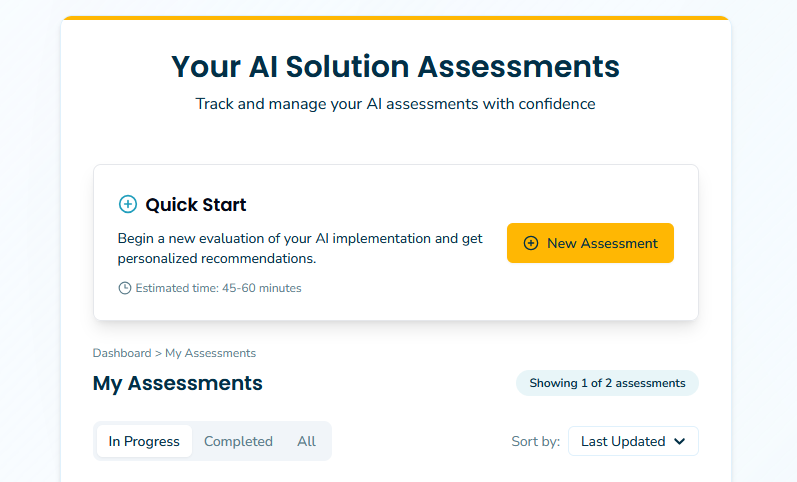
Artificial Intelligence promises to transform how non-profits serve their communities, but the path forward isn't always clear. Should your organization implement that partner chatbot that offers support? Will AI actually help you serve more people, or just create new problems?
The Ethical AI Assessment Tool exists because generic AI advice doesn't work for mission-driven organizations. Unlike for-profit companies focused primarily on efficiency and revenue, non-profits must balance technological benefits with their values, mission, and deep commitment to the communities they serve.
This platform provides a structured assessment process specifically designed for non-profit organizations. Whether you're a small community group considering your first AI tool or a large foundation evaluating complex systems, the Assessment Tool helps you make inf
Why This Tool Exists
142 words
Move How the Assessment Tool Works
Open How the Assessment Tool Works
How the Assessment Tool Works
The Ethical AI Assessment Tool guides you through a comprehensive evaluation across four essential modules. Each module contains 10-12 questions designed to surface the most critical considerations for responsible AI adoption in non-profit contexts.
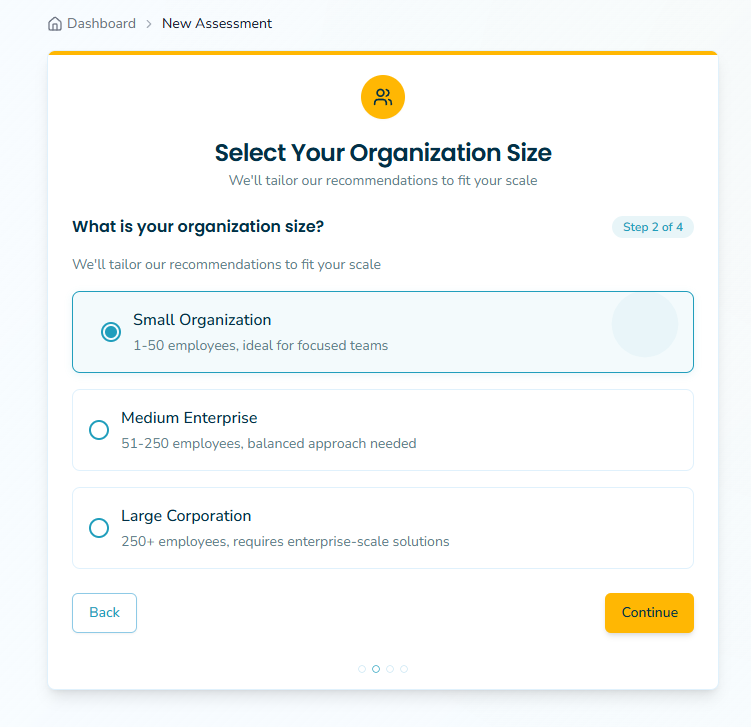
The assessment begins with a brief organizational profile where you describe your organization type, size, and AI experience level.
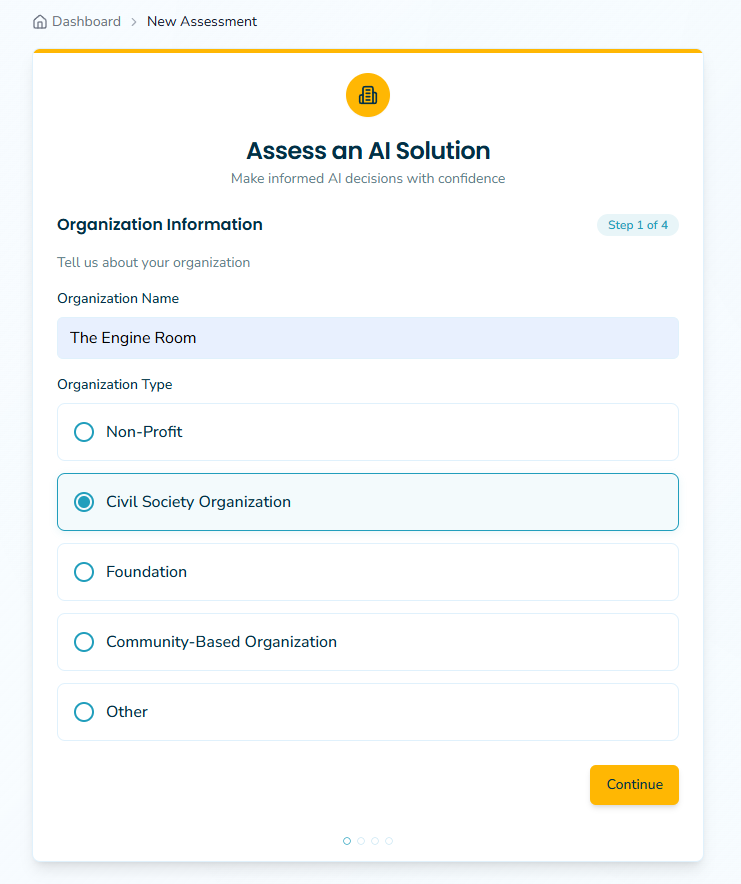
This information helps tailor recommendations throughout the process. A small community organization will receive different guidance than a large foundation.
As you progress through modules, the platform calculates scores across 14 dimensions of responsible AI—from necessity and value alignment to bias testing and environmental imp
How the Assessment Tool Works
139 words
Move Your Assessment Journey
Open Your Assessment Journey
Your Assessment Journey
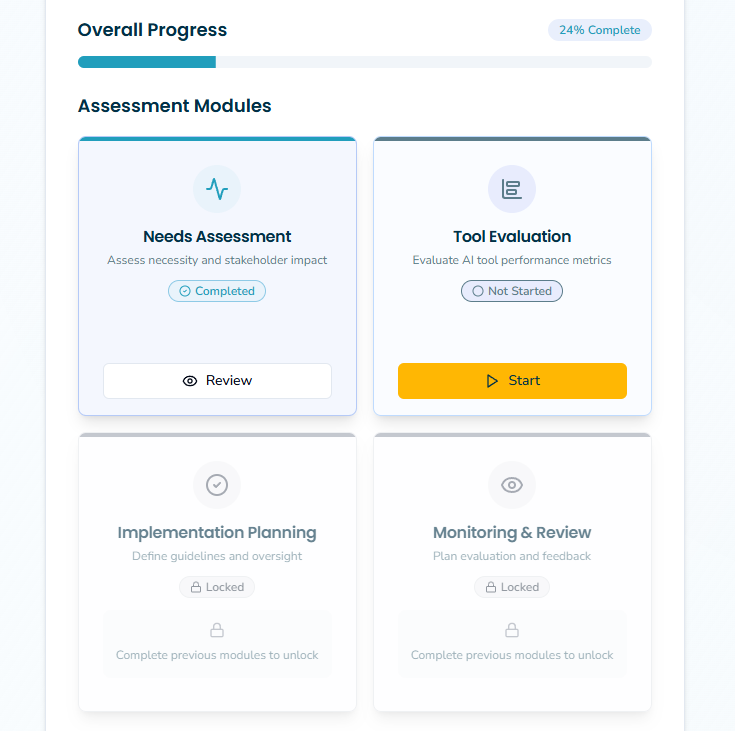
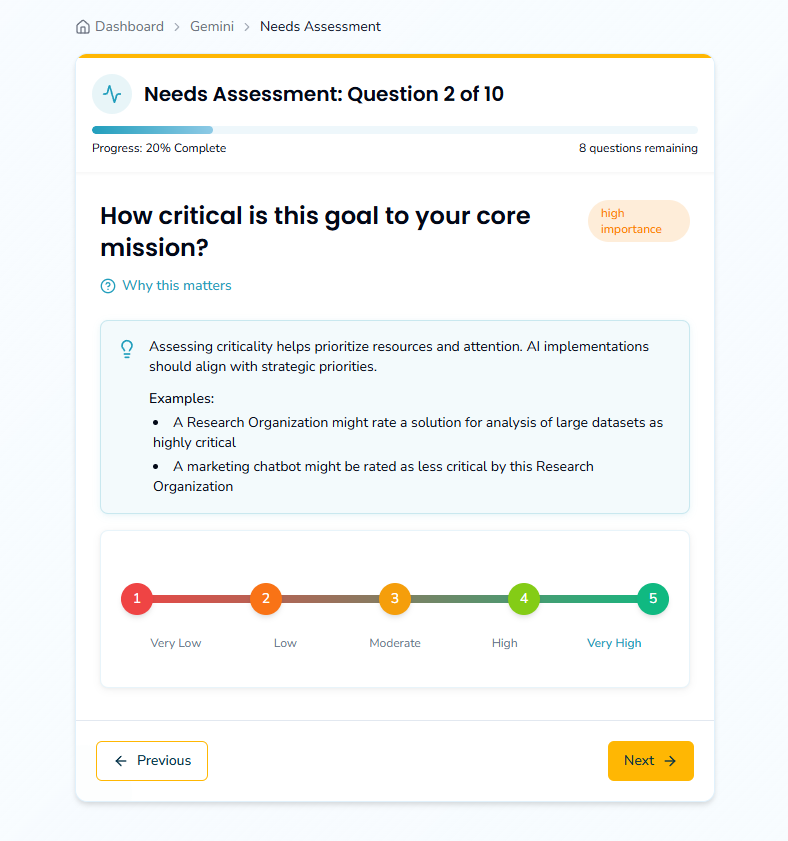
Needs Assessment
Needs Assessment asks the fundamental question: Do we actually need AI for this? Many organizations rush toward AI when simpler alternatives might be more effective or appropriate. This module helps you honestly evaluate whether AI addresses a genuine need.
You'll explore your primary goals, how AI aligns with organizational values, and the potential impact on different stakeholder groups—especially vulnerable populations. The module also examines your available resources, from staff time to technical expertise.
Tools Evaluation
Tool Evaluation dives deep into the specific AI system you're considering. This technical assessment covers privacy protections, bias testing, transparen
Your Assessment Journey
252 words
Move Understand your results
Open Understand your results
Understand your results
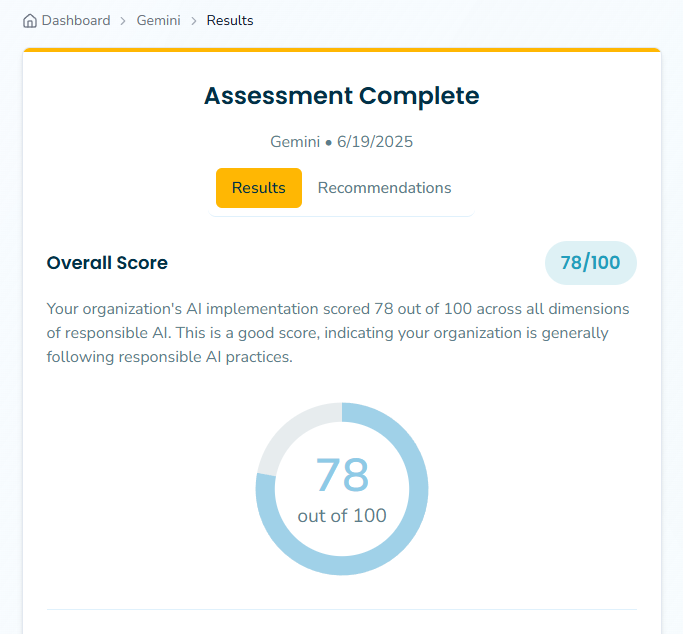
Upon completing all modules, you receive a comprehensive assessment with scores across 14 dimensions of responsible AI. The platform generates an overall score and identifies specific risk areas that need attention.
The centerpiece is a radar chart visualizing your performance across all dimensions, making it easy to spot both strengths and areas needing improvement. Risk areas are flagged by priority level—critical, high, medium, or low—helping you focus efforts where they matter most.
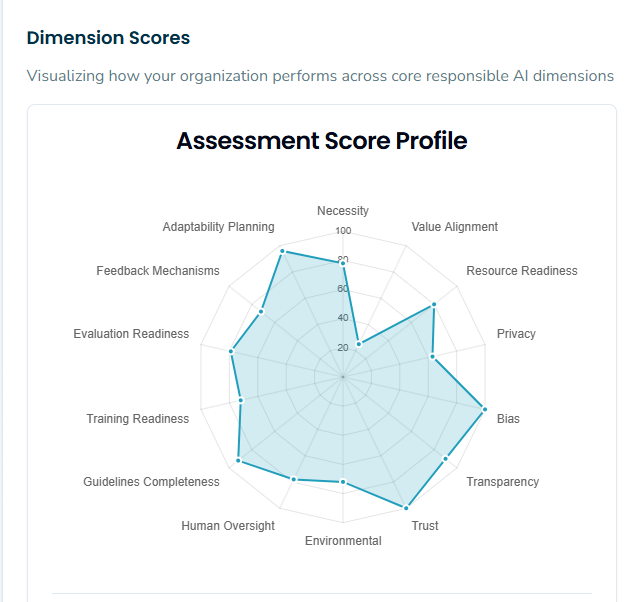
The platform provides organization-specific insights, highlighting which dimensions are particularly important for your type of non-profit. Foundations typically see emphasis on privacy and human oversight. Community organizations
Understand your results
137 words
Move Getting Actionable Recommendations
Open Getting Actionable Recommendations
Getting Actionable Recommendations
The most valuable output is a prioritized list of actionable recommendations tailored to your specific assessment responses and organizational context. These aren't generic best practices, but specific guidance based on your actual risk areas.
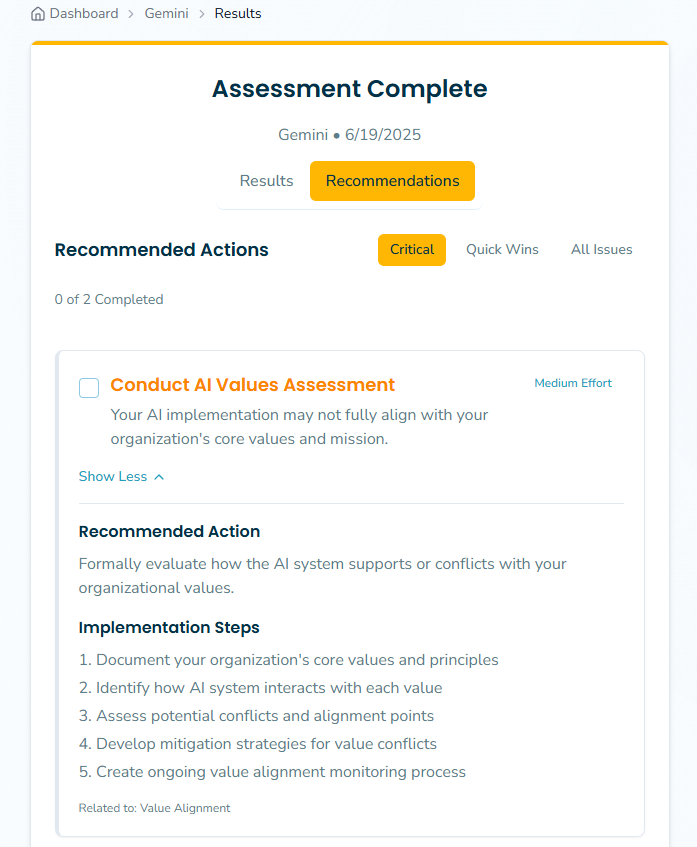
Recommendations are organized by priority level and effort required. You can filter to see only critical issues, focus on "quick wins" that require minimal effort, or view all recommendations at once.
Each recommendation includes a clear title, detailed description, specific actions to take, and implementation steps broken down into manageable tasks. The platform tracks your progress as you mark recommendations complete, providing a visual indicator of improvement over time.
Recommendations are designed to be actionable even for organizations without extensive technical expertise, suggesting p
Getting Actionable Recommendations
135 words
Move Behind The Scenes
Open Behind The Scenes
Behind the scenes
The AI Assessment Tool was developed by Brian Obilo with Growth support from Paola Mosso (both of The Engine Room).
It emerged from looking back at our Deep Dive Week output from last year where we had originally explored - Responsible AI Adoption for CSOs and the specific challenges they face when adopting AI technology.
The 14 assessment dimensions are grounded in established AI ethics frameworks but adapted for mission-driven contexts.
Built as a web application, the tool works on any device with an internet connection, requiring no special software to begin your assessment. It also doesn't collect any information at all - it stores all assessment data on the user's browser.
Behind The Scenes
118 words